
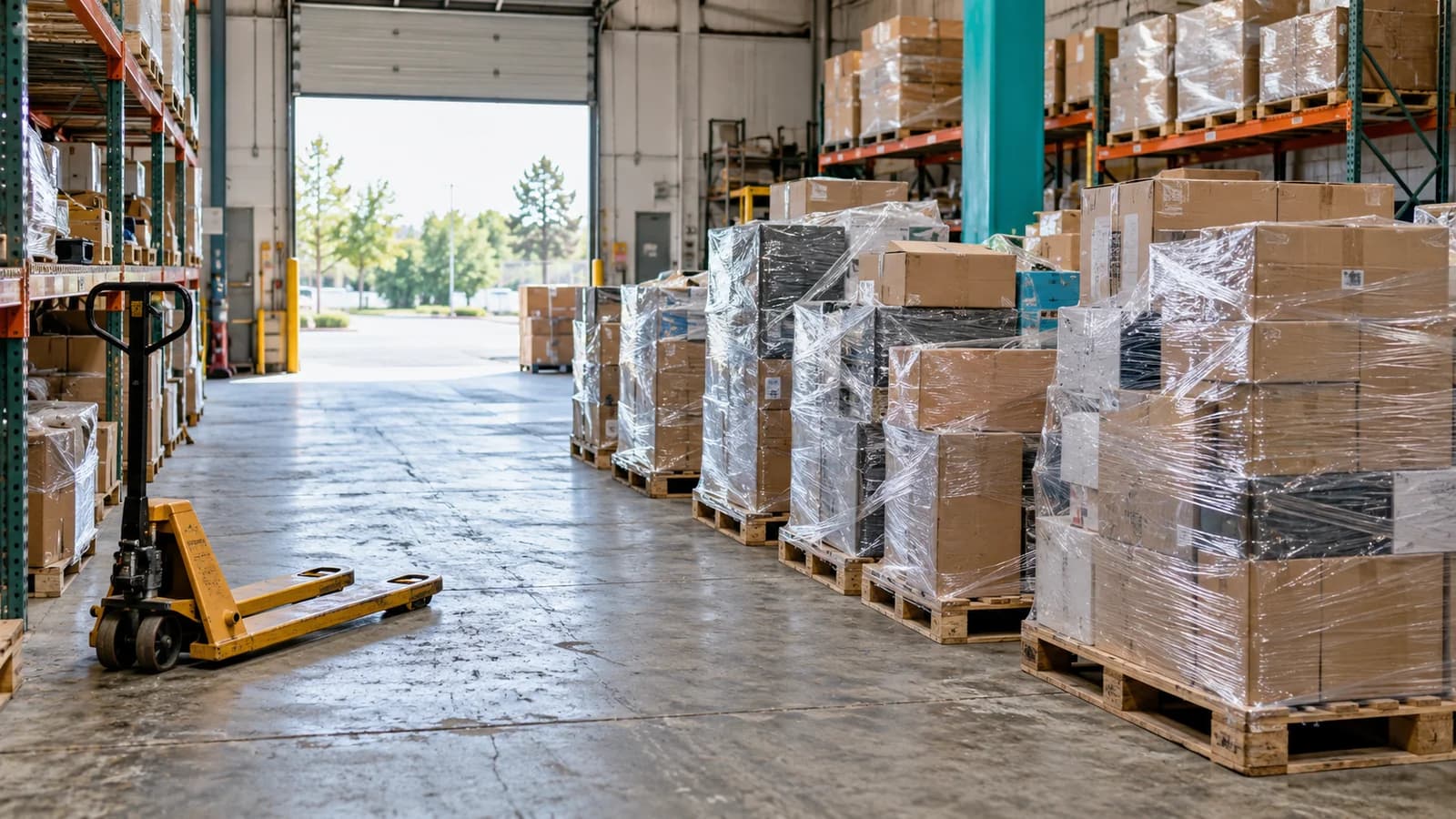
You can buy liquidation pallets through retailer marketplaces, liquidation sellers, and local warehouses. The right place depends on the evidence you can inspect, the inventory you can sell, and the full cost of receiving it.
A list of supplier names is only a starting point. Two lots on the same platform can have different sellers, conditions, shipping arrangements, and purchase terms. A familiar marketplace name does not remove the need to review the specific offer.
This guide explains the main buying channels and seven checks to complete before paying. It is a due-diligence process, not a ranking based on purchases we have not made.
The main places to buy liquidation pallets
Retailer marketplaces and auction networks
Marketplace networks let buyers compare lots across different inventory sources. You may encounter retailer-specific storefronts as well as listings from other sellers. Read the terms for the storefront and lot you actually choose.
B-Stock's auction guide describes a listing structure that includes manifests, condition, packaging, and shipping information. Use those fields to compare offers rather than relying on the headline retail value.
This channel suits buyers willing to review files and terms before bidding. It does not make every listed product tested, complete, or profitable. You still need a buying limit and a plan for receiving the shipment.
Liquidation sellers with direct listings
Some sellers offer inventory through direct purchase or negotiated offers. Direct Liquidation's buying guide currently describes browsing inventory, making an offer or buying at the listed price, and arranging checkout and shipping.
That is a buying process, not evidence that a particular lot meets your needs. Review each listing's condition information and current purchase terms. Do not assume every liquidation website uses the same auction format or payment rules.
Local liquidation warehouses
Local sellers can be worth considering when distance permits collection or an inspection appointment. The advantage is the possibility of examining stock and discussing logistics directly, not an automatic guarantee of lower costs.
Ask what inspection actually allows. Looking at wrapped pallets from an aisle is different from checking contents, model labels, or accessories. Confirm the rules before making the trip.
Local collection also consumes time, vehicle capacity, and labor. Compare those costs with delivered inventory instead of treating pickup as free shipping.
1. Verify who is selling and receiving payment
Establish the seller's business identity, contact details, and role in the transaction. Determine whether the platform handles the sale or merely introduces you to another business.
Check that the invoice, payment instructions, and written terms identify the same party. If something changes during the transaction, verify it through an independently confirmed contact method before paying.
Useful questions include:
- Who owns or controls the inventory being offered?
- Which business will issue the invoice?
- Where is the stock physically located?
- Who handles missing inventory or shipping questions?
- Can the seller provide written terms before payment?
Do not treat a professional logo, social following, or screenshot of a retailer receipt as sufficient verification. Those details cannot replace a clear chain from listing to invoice to stock.
2. Ask for the manifest and understand its limits
A usable manifest lets you inspect product descriptions, quantities, identifiers, and any stated conditions. Check that the file belongs to the exact lot, not a representative pallet from an earlier sale.
Ask about substitutions and quantity tolerances. If the seller cannot provide item-level detail, recognize that you are making a different kind of purchase with less information.
For a first purchase, favor stock you can identify and count. Mystery inventory can look inexpensive while preventing the research needed to decide whether the price makes sense.
Use our eight checks for reading a liquidation manifest to separate rows, units, sets, and missing fields. A clean file is useful, but it is still not a physical inspection or a resale guarantee.
3. Translate condition labels into specific facts
Ask what was tested, what remains unknown, whether accessories are included, and whether photographs show the actual stock. Keep packaging condition separate from product function.
Do not carry one seller's grade definition into another supplier comparison. A Grade A label can describe a different process depending on who applied it.
If a seller quotes a working percentage, ask for its scope. Was the figure measured on this lot, on a sample, or across unrelated inventory? Ask when and how testing occurred.
Our liquidation condition guide provides a checklist for returns, overstock, open-box, refurbished, and salvage inventory. Choose stock whose inspection requirements match your skills. A discount does not supply missing repair knowledge or equipment.
4. Get the complete landed cost
The listing price is only one part of acquisition cost. Before paying, get a written explanation of buyer charges, shipping, handling, and any destination requirements that affect the quote.
For freight, confirm pallet count, dimensions, weight, origin, destination, appointment requirements, and unloading arrangements. Ask whether residential delivery, liftgate service, or limited access changes the price. Do not assume an online estimate includes every service you need.
For pickup, include vehicle rental or mileage, loading help, travel time, and the practical limits of your equipment. Confirm collection hours and any deadline or storage charge.
Compare suppliers using landed cost for inventory you can realistically sell. A lower bid can become the more expensive purchase once delivery and receiving requirements are included.
5. Read sale, inspection, and claim terms before payment
Look for rules covering inspection, payment deadlines, collection, cancellations, quantity discrepancies, and the condition represented. Find out what evidence a claim requires and where it must be submitted.
Save a copy of the terms that apply to the purchase. A general help page may not describe every exception on a specific lot.
Do not assume that disappointment with resale value creates a valid claim. Compare the seller's actual promise with the issue you want to raise. An as-is sale and a tested-condition sale present different expectations, but neither should be interpreted from the label alone.
If a material term is unclear, ask before bidding or paying. A seller who cannot explain a basic receiving or discrepancy process leaves you with uncertainty that should affect the decision.
6. Match the lot to your selling capacity
Supplier selection should start with your buyers and operations, not just available stock. Ask where you will list the products, how much space they need, and how quickly you can inspect and prepare them.
A mixed pallet can spread product risk while adding research and listing work. A concentrated lot can simplify processing while leaving you with many identical units to sell. Neither is always better.
Write down your constraints before browsing:
- Categories you can identify and inspect competently.
- Maximum receiving and storage space.
- Time available for testing, cleaning, photography, and listing.
- Channels where you have realistic access to buyers.
- Cash you can leave tied up without depending on immediate sales.
- Categories or conditions you will not accept.
A lot that exceeds those limits is not a good fit merely because the stated discount is large.
7. Set a buying limit and a reason to walk away
Research condition-matched resale evidence, account for unsupported items, and subtract the costs of selling and receiving the stock. Decide on your limit before negotiating or watching an auction close.
Do not use a percentage of stated retail as your entire buying method. Retail reference totals can obscure missing parts, unknown function, old models, and slow-moving quantities.
Our max-bid guide provides a worked example using PalletWorth's shared economics functions. Our retail-versus-resale explanation shows why the evidence behind the total matters.
Write down a walk-away condition as well as a price. Examples include unresolved seller identity, a manifest that does not match the lot, or shipping requirements you cannot meet. Not every problem can be compensated for by bidding less.
A fictional local-versus-delivered comparison
Suppose two offers contain comparable quantities and categories, but neither has been inspected by you. These numbers are illustrative, not current supplier quotes.
The local lot costs $600. You budget $90 for transport, $60 for loading help, and $50 for additional receiving costs. Your planned landed cost is $800, before product preparation and selling expenses.
The online lot costs $500, with a $50 buyer charge and a $300 freight quote covering your required delivery services. Its planned landed cost is $850, again before preparation and selling expenses.
The local offer is $50 cheaper on those assumptions. That does not settle the purchase. If the online lot has clearer condition evidence, or the local lot contains more unsupported units, the comparison changes.
Use the same checklist for both offers. Do not give local inventory a free pass because you can visit, or online inventory a free pass because the website is familiar.
Keep a supplier scorecard after the purchase
Use the same seven checks for each offer:
- Verify seller identity and payment details.
- Match the manifest to the specific lot.
- Clarify testing, condition, and completeness.
- Confirm landed cost and receiving requirements.
- Save sale terms and claim procedures.
- Check the fit with your selling capacity.
- Set a buying limit and walk-away conditions.
Record whether the manifest matched, whether condition descriptions were useful, whether delivery costs changed, and how the seller handled questions. Separate factual discrepancies from a resale outcome caused by your own assumptions.
Track inspection time and units still waiting to be assessed. A supplier may deliver as described while the inventory remains unsuitable for your business.
One purchase is a limited sample. Use it to improve the next decision, not to declare an entire platform trustworthy or unreliable. Over time, compare similar categories and condition groups rather than pooling every pallet into one average.
Frequently asked buying questions
Where should a beginner buy liquidation pallets?
Start with a verifiable seller offering a manageable lot, clear item information, understandable condition terms, and delivery you can handle. The channel matters less than your ability to evaluate the specific purchase. Avoid increasing lot size before you understand your receiving and selling costs.
Are local liquidation pallets cheaper?
Sometimes, but collection has costs. Include transport, labor, time, and equipment before comparing a local price with a delivered quote. Also compare evidence quality and saleable inventory rather than price alone.
Is buying directly from a retailer always possible?
Availability and buyer requirements depend on the retailer and sales channel. Check the official storefront and current registration terms. Do not assume that a third party using a retailer's name represents a direct relationship.
Should I buy an unmanifested pallet?
Only if your buying method can handle the missing information and you understand what the seller promises. Without item-level detail, product research and quantity verification are harder. A manifested lot in a familiar category is a clearer starting point for evidence-based buying.
Compare the offer, not the sales pitch
Choose a supplier through verifiable identity, usable inventory information, clear condition terms, and a landed cost you understand. Then decide whether that particular lot fits your business.
Use PalletWorth to review a manifest before committing to a purchase. Keep questions and unsupported values visible. The most useful result may be a lower buying limit, a request for clarification, or a decision not to buy.
By PalletWorth. The cover is an AI-generated editorial illustration, not a photograph of a named supplier. Supplier links are research starting points, not endorsements or claims of firsthand purchasing experience. Prices in the comparison are hypothetical.